Engineering a Growth Marketing Design System that Scales
How we brought consistency and speed to a disjointed design process
Summary
- Growth Marketing at Indeed produced 13,000+ assets a year across 10 channels through multiple external agencies
- Demand to feed the algorithm with creative variation led to fragmented creative and inflated customer acquisition costs.
- Built a systematic framework instead of rigid templates: brand building blocks plus channel-specific best practices, giving designers room to vary creative while staying unmistakably Indeed.
- Delivered as a living Figma design system covering typography, color, illustration, photography, layout, and channel-specific component libraries.
- Scaled across multiple teams and external agencies.
- Shrank revision cycles and let designers make brand-aligned decisions without second-guessing, speeding ramp-up for new team members and agencies alike.
Growth Marketing at Indeed operates at massive scale. In a single year, we worked with multiple external agencies to produce over 13,000 assets across 10 channels. Without a design system, algorithm-driven variation fragmented our production process. Creative became inconsistent. Brand recognition suffered. Customer acquisition costs got higher and higher.
I served as both Creative Technologist and Creative Director on this project. My partner was Laura McGarrity, an expert program manager. Together, we led a team of designers and copywriters to build a comprehensive design system for Growth Marketing at Indeed. It brought brand consistency to the work while giving algorithms the creative variation they need to succeed.
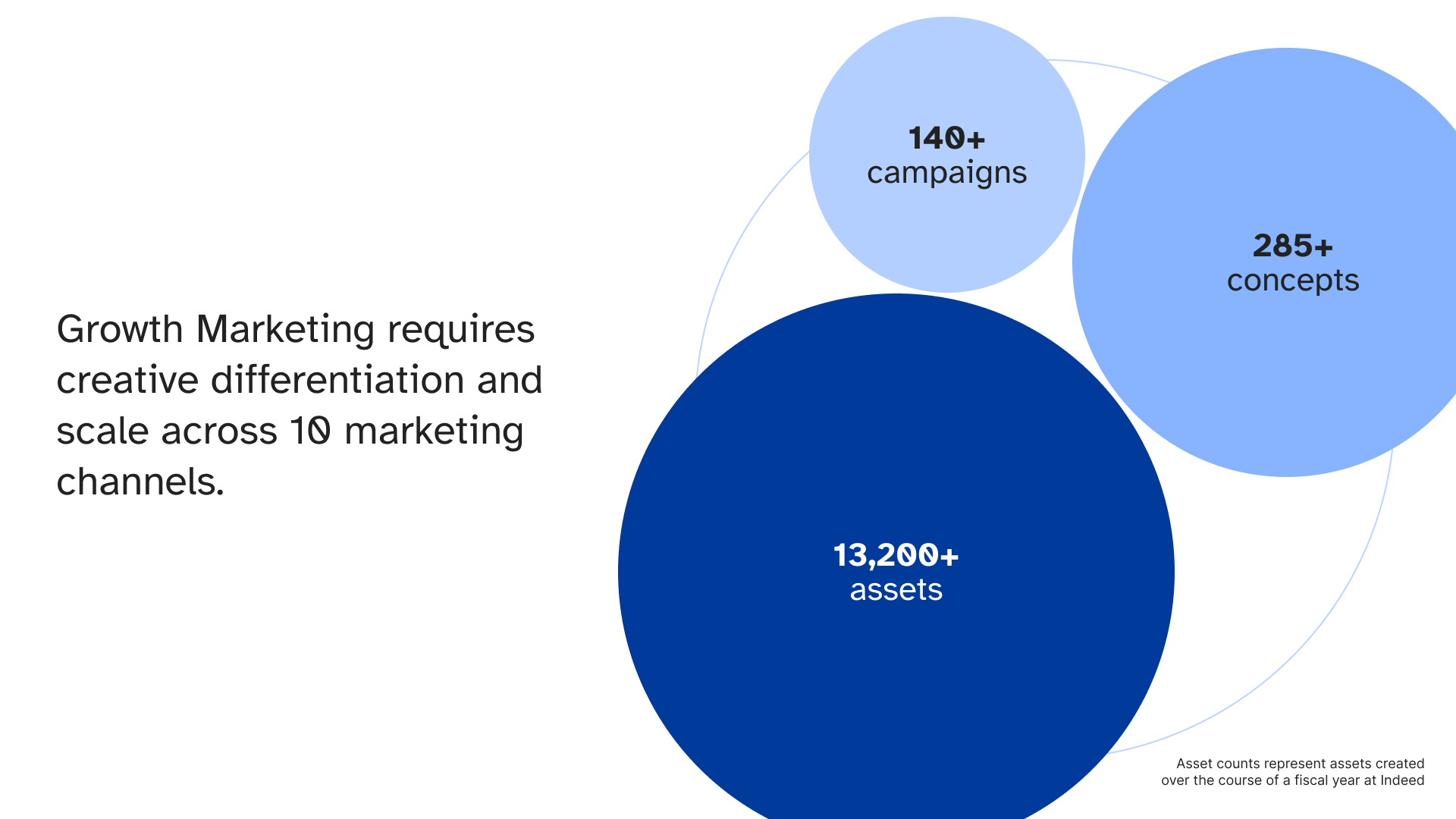
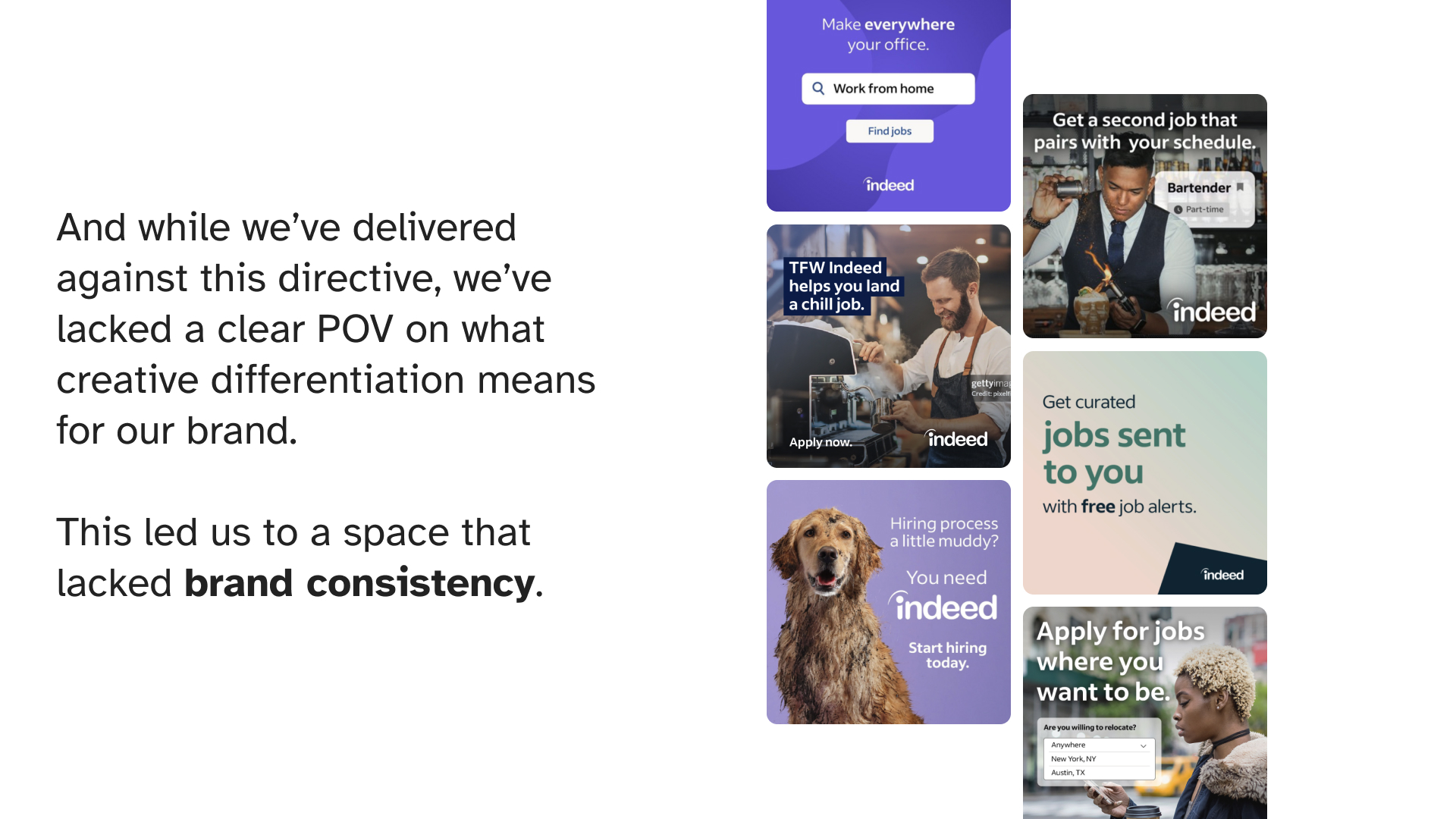
To meet this challenge, we brought a brand mindset to performance marketing. Three goals drove the work: make ads instantly recognizable as Indeed. Support the creative differentiation performance marketing demands. And enable production at scale to lower cost per apply and download.
Rather than creating rigid templates that would stifle the creative variation performance marketing requires, we developed a systematic approach built on identifying brand building blocks and channel-specific best practices. This framework would give designers the flexibility to create fresh variations while maintaining unmistakable Indeed DNA across all touchpoints.
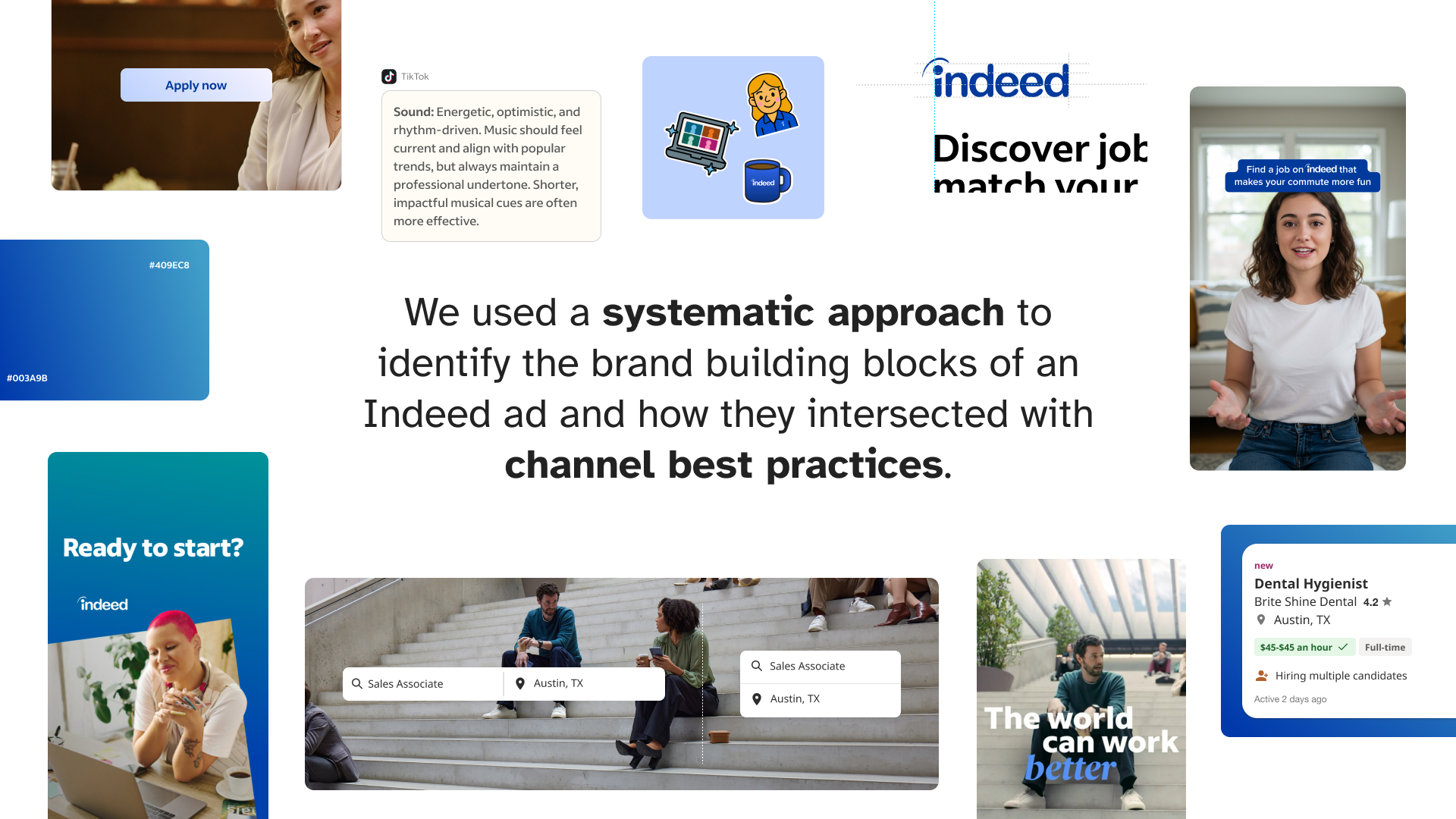
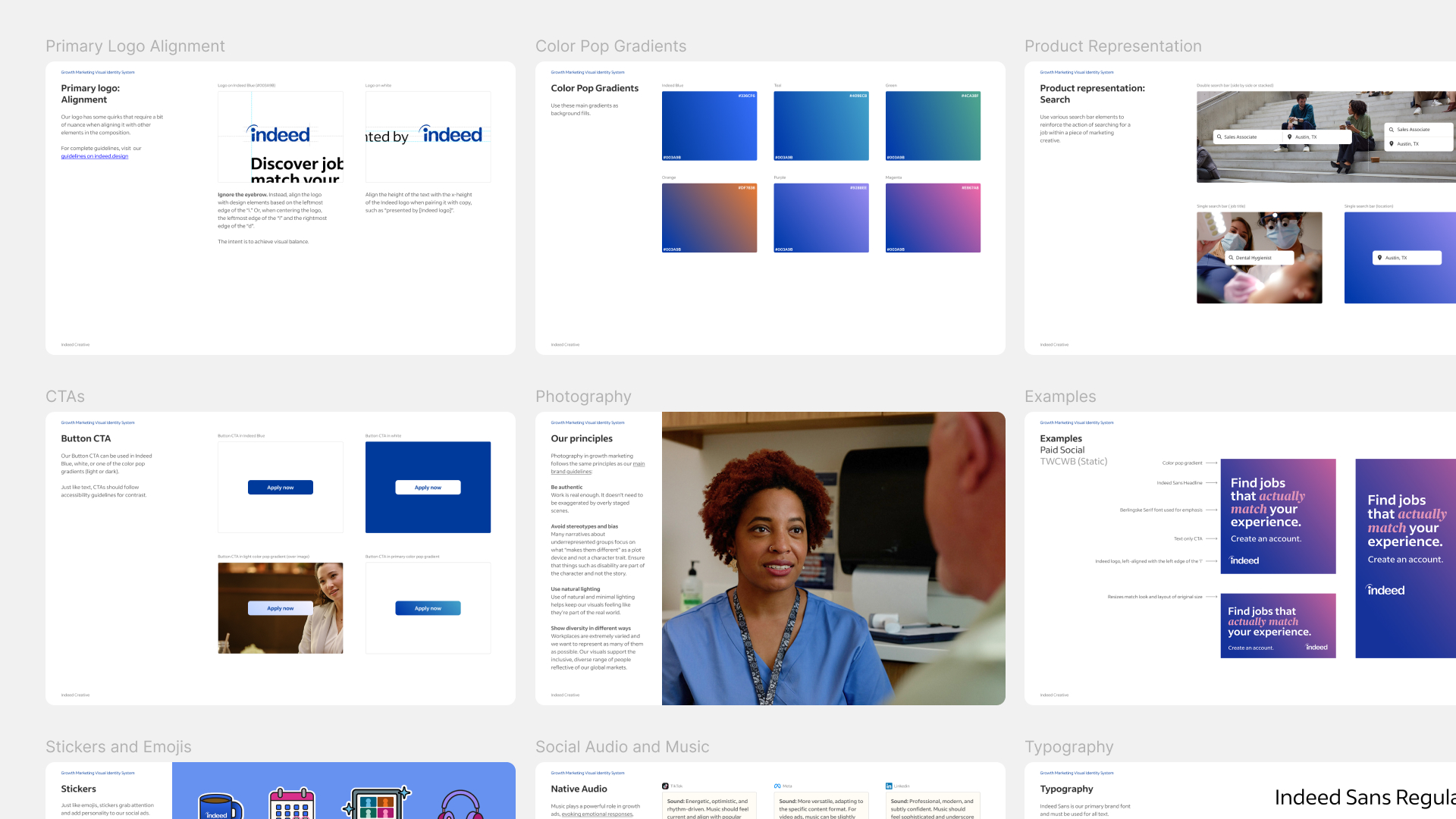
The framework became a living design system in Figma. Part creative playbook, part collaboration hub. A single source of truth teams could explore, share, and build from. It codifies Indeed's visual language for growth marketing: typography scales, color palettes, illustration styles, photography treatments, layout principles, and component libraries optimized for each channel.
The framework documents standards, provides practical guidance, and contains reusable components that accelerate production. Designers at Indeed and external agencies can quickly spin up new concepts knowing they're working within guardrails that ensure brand consistency while still having room for creative variation.
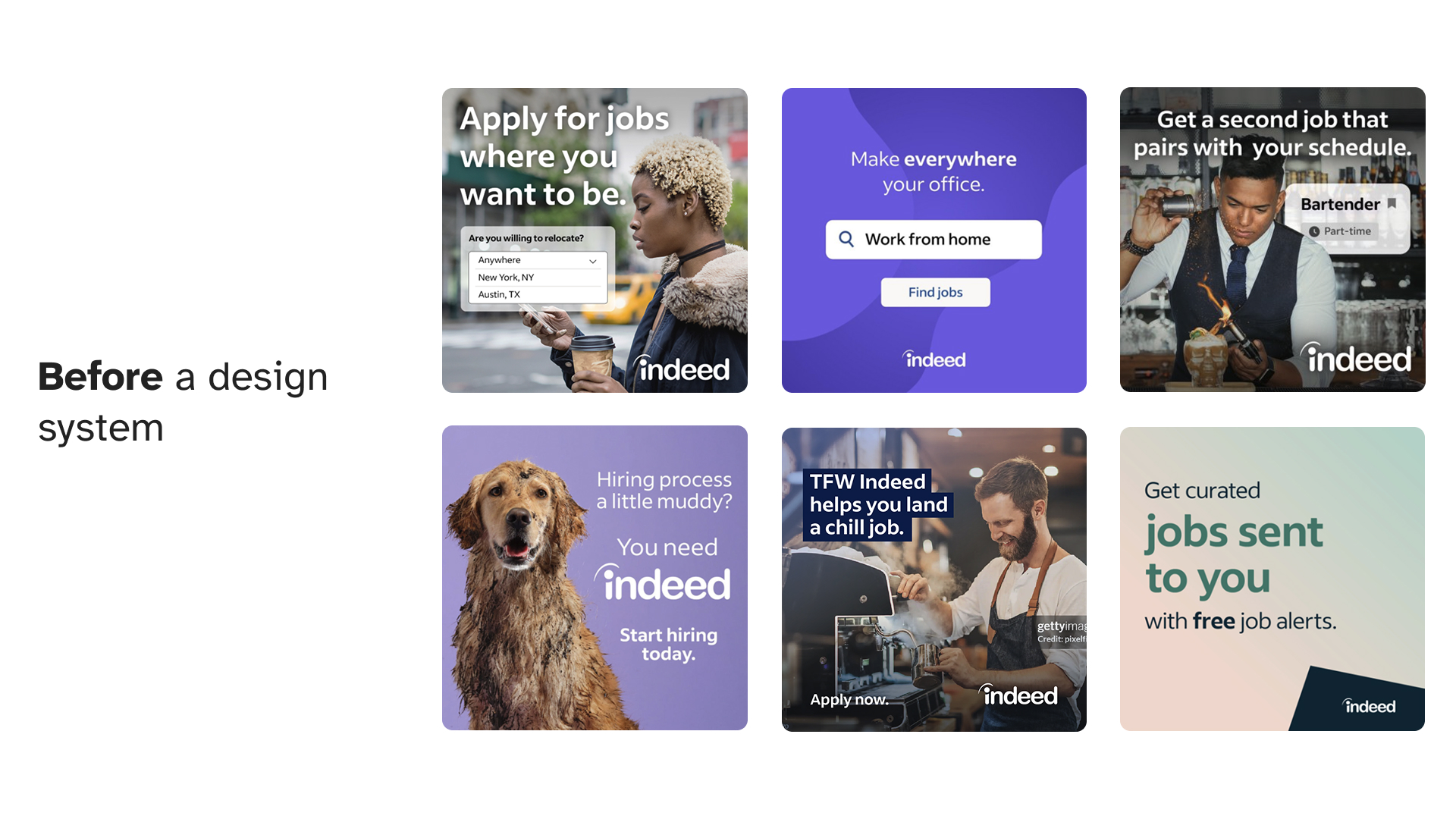
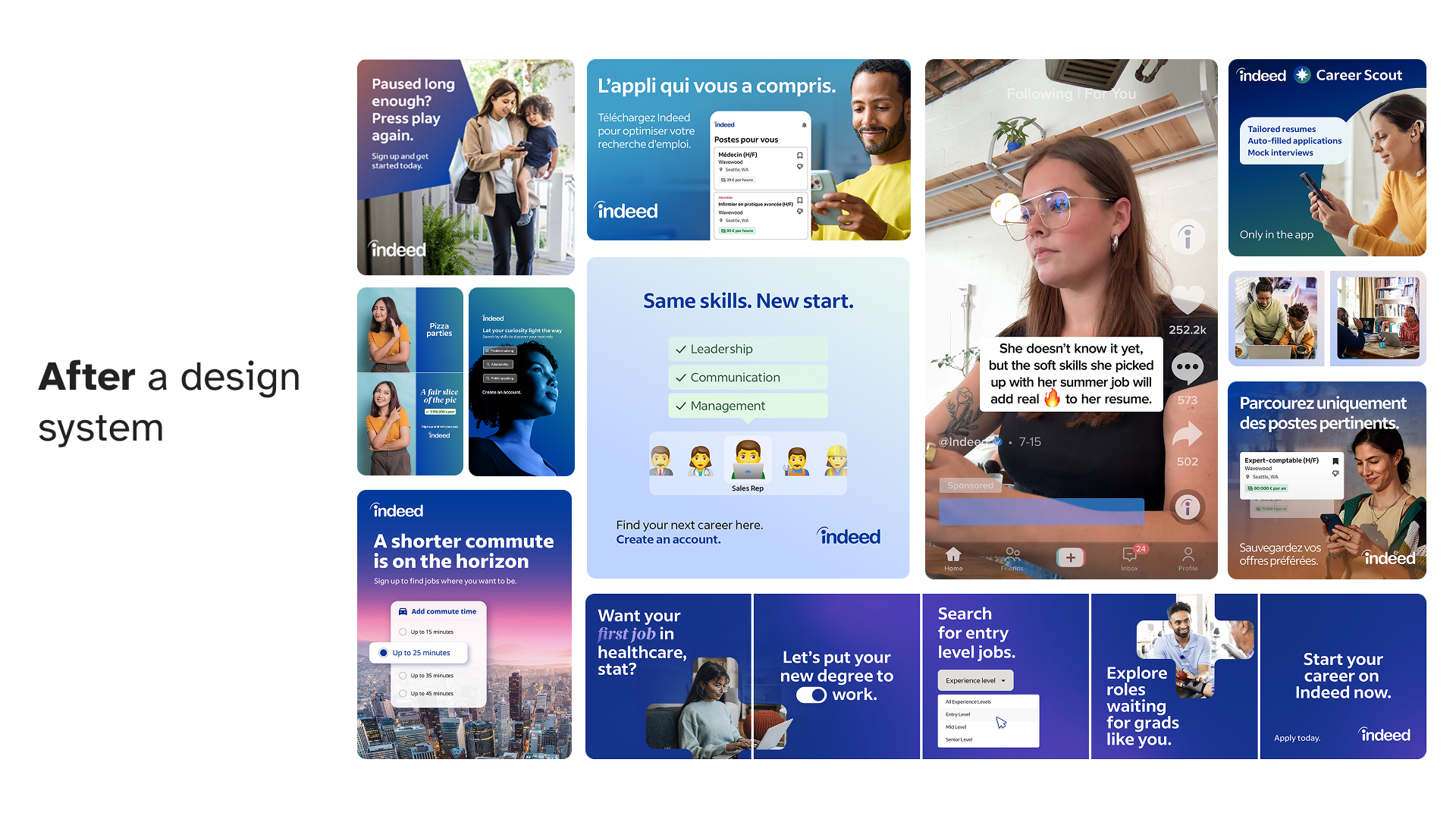
The impact of the design system is immediately visible when comparing before and after states. What was once a scattered collection of disconnected creative executions transformed into a cohesive visual ecosystem that's unmistakably Indeed—while still providing the variation and freshness that performance marketing algorithms reward.
The Impact
The design system changed how Indeed approaches growth marketing creative. Iteration got faster. Revision cycles shrank. Designers could make confident, brand-aligned decisions without second-guessing. New team members ramped up quickly. And cross-functional collaboration improved when everyone worked from the same playbook.